
GloboTreks is reader-supported through affiliate links. If you make a purchase through these links, I might earn a commission at no extra cost to you. Thank you for your support! – Norbert
I love cities where you can rely on their good public transportation system, but I love even more cities where you can tour them entirely with the power of your own two feet (and fat).
Stockholm, Sweden is one of those cities, and this is how I could see the city center on foot. But wait! Did you know Stockholm’s city center is actually composed of 14 islands? Yup! They all offer something different and the best thing is that bridges connect them all.
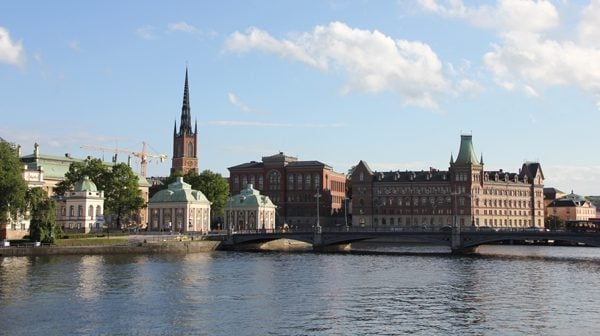
Where to Stay in Stockholm
First of all, location is essential. I arrived by train to the central station in Norrmalm, which is very close (10 minutes walking) to Gamla Stan –the old town and one of the largest and best-preserved medieval city centers in Europe.
I recommend staying at City Backpackers Hostel, which is one of the best and most popular hostels in the city (especially if you like to party), and it is located just steps away from the train station.
If you wish for something more in the midrange, The Sparrow Hotel is a top choice. It has an excellent location in the Old Town and it is highly reviewed. One of the best hotels where you get more value for your money.
I also recommend Best Hostel Old Town, which is centrally located in Gamla Stan (the Old Town) and decent in price. I stayed there, so in my opinion, this is an excellent base to walk to the most popular attractions in Stockholm.
The rooms are good (with a view towards the river and Skeppsholmen Island) and they offer free pasta all day!! The pasta alone was a deal maker for me given the fact that Stockholm is an expensive city.
Also at the hostel, I met by pure coincidence a Swedish local, and through her recommendations, I was able to enjoy some of the best things in Stockholm, which I’ll tell you now.
Ok, back to walking…
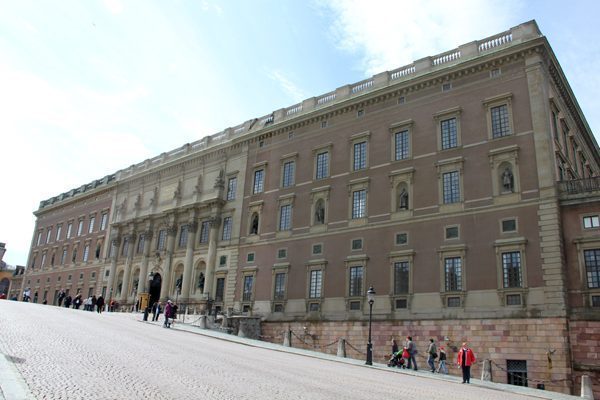
What to See in Gamla Stan – Stockholm’s Old Town
First thing first, on my first day in Stockholm I had to explore Gamla Stan. The island is really small, so walking all of it was a breeze.
Along its narrow streets, I saw many small plazas and a few beautiful churches dating back to the 18th century and earlier. Probably the most impressive building there is the Royal Palace, one of the largest palaces in Europe (with over 600 rooms) and the residency of the King of Sweden.
The Palace was mostly built during the eighteenth century in the Italian Baroque style, and today, you can not only enjoy the architecture from outside but also see its lavish interiors.
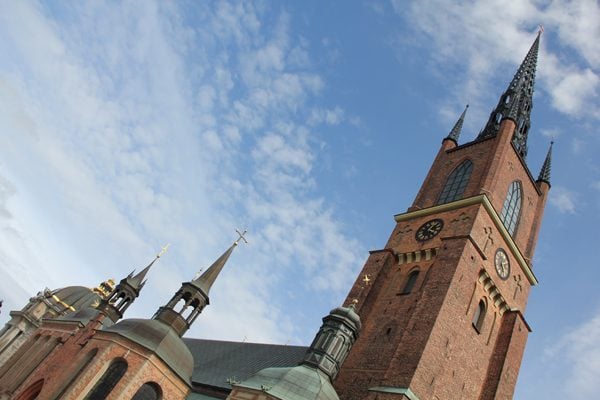
Then I crossed to Riddarholmen, which is situated right next to Gamla Stan, for one particular reason. While walking the old town I could see on the distance a church bell tower that looked like none I had seen before. I wanted to see it up-close.
It belonged to Riddarholms Kirkan (church). What made it so interesting was not only the tall, sharp pointy shape but also how the translucency of its structure let the sunset light shine through the spire.
It is a delicately sculpted and decorated spire that is reminiscent of the days when buildings were thought of as a delicate art. In fact, this is thought to be the oldest surviving building in Stockholm.
In the old town area, there’s also the Parliament building, which sits on its own island – right in between Norrmalm and Gamla Stan.
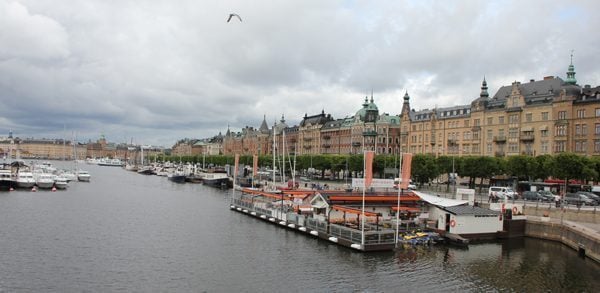
Walking to Stockholm’s Other Islands
The next day I wanted to extend my walking radio. Outside of the old town, in my opinion, the other island I enjoyed a lot was Djurgarden.
To get there, I walked from the old town to Norrmalm and walked all along the waterfront in Ostermalm – which has a beautiful and well-conserved wall of baroque and art nouveau buildings looking towards the equally interesting wall of sailboats boats parked along the harbor.
In Djurgarden I could see the Nordiska Museet (the Nordic Museum) and the Vasa Museet.
The Vasa Museet I had to see after I heard the story behind it. Inside it is housed the Vasa, the only preserved 17th-century ship in the world, with more than 95% of the ship still original.
But, the interesting thing is that this warship sank during its maiden voyage in 1628. After sailing only 1300 meters, the sails caught a wind that heeled the ship to port. It heeled so much that the water rushed in through the open gun ports, sinking the ship. It was salvaged in 1961.
But, how does a sunken ship survive almost intact for so long? The Vasa sank at the “perfect spot” where the saltwater meets with the river freshwater, making it a “desirable” spot free of all kinds of bacteria that commonly decompose ships. The ship is well worth seeing, even though the museum is a bit expensive.
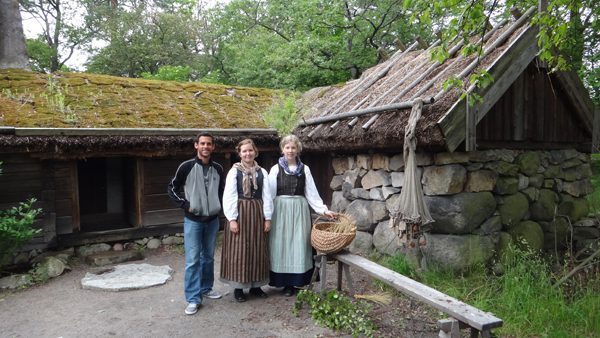
Also in Djurgarden is Skansen, which I could describe as “mini Sweden from the past”. Skansen is the oldest open-air museum in the world and it houses the Stockholm Zoo.
It has 150-plus traditional buildings –homes shops, churches, barns, and workshops– organized as a miniature Sweden. Nearly all of the buildings are original and were transported here piece by piece from all over Sweden.
I found it really curious to watch the bakers, glass blowers, and potters at work and fully dressed in their vintage attire. It’s also nice to picnic here and in other areas of Djurgarden.
One thing to have in mind is that I did all this walking and island hopping during the summer when the weather was perfect. Alternatively, if you’re visiting the city during the winter, you can check here the best things to do in Stockholm during winter.
Also, you can opt to do the above and more with the best boat tour in Stockholm.

A Night at Sodermalm
And, last but not least, all this walking must have been well rewarded, right? As recommended by my new Swedish friend, she took me to Sodermalm – south of Gamla Stan – where I could eat relatively cheap (though still a bit expensive since this is Sweden!) and hop on a few “cheap” bars without the tourist crowd!
Apparently, in Sodermalm is where the locals go to drink and party, while tourists stay mostly in Gamla Stan. So, now you know where to go.
There is much more you can do by walking Stockholm within a few days, but these are some of the more popular sights that you shouldn’t miss.

LET ME HELP YOU TRAVEL MORE BY GETTING ADDITIONAL TIPS AND INSPIRATION VIA THE MONTHLY NEWSLETTER.
Plus, receive a short e-book with 15 Beginner Tips and Tricks to Save Money on Flights!
i was just here a few weeks ago and was amazed by how easy it was to get around. I also walked everywhere and thought it was great. There is so much to see and every area has a different flavour. Plus you can walk around almost until midnight and it’s still light outside (in the summer of course). The sunsets last forever and it is just a beautiful city. Glad you enjoyed it.
That’s so true! When I was there it was 3am and it looked as if it was 3pm. It was crazy for me, since I grew up in the caribbean, where the sun goes dow at 7pm the latest. But, I loved it and I loved walking Stockholm. Such a beautiful city!
I love walking cities!!! I live in a city now where you HAVE to own a car. 🙁
I love them too! Oh, I wish US cities were more pedestrian friendly, but let’s hope things chance in the future. 😉
Your post has reminded me that I have to visit Stockholm…soon! Looks great!
Elle, Stockholm is great! I loved it! I only wish I could have stayed there more time.
Walking Stockholm is indeed great – I also love compact cities. But in the summer months you should definitely consider using a city bike to get around. You can cover big distances and cycling round Djurgården is amazing – it feels like you’re way out in the countryside.
Thanks for the biking tip, Andy!
One of my favorite places! Definitely a walking city — and you just don’t want to stop, because every view, every building, every glimpse of water or park is practically perfect.